Whatever happened to ... Monkey Hollow?
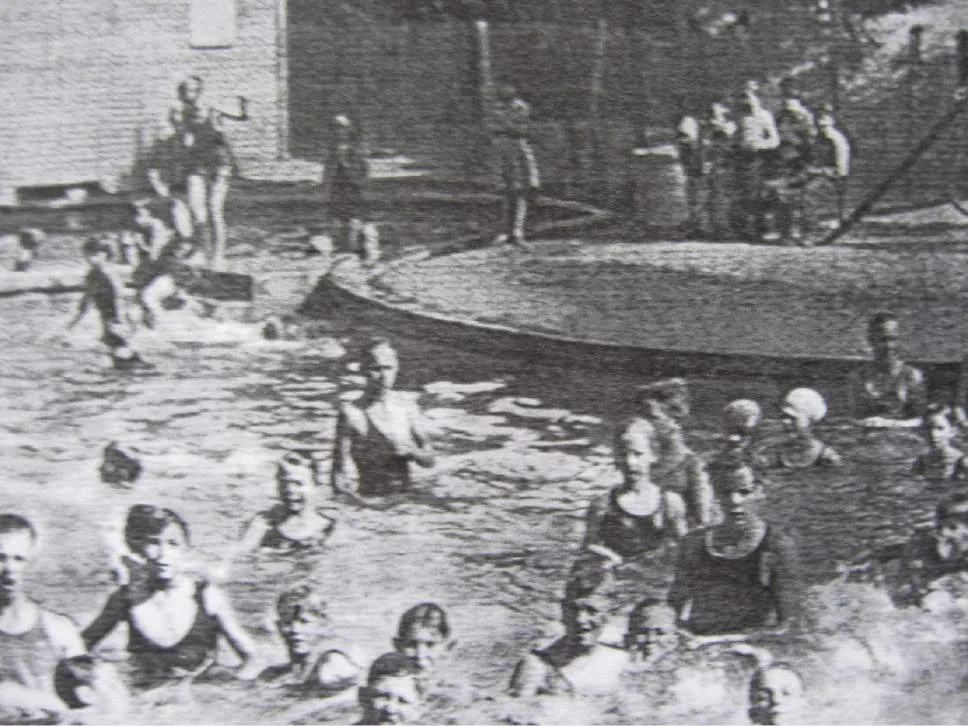
A glance into Utahns' once-favorite swimming hole, Monkey Hollow.
Editor's note • In this regular series, The Tribune explores the once-favorite places of Utahns, from restaurants to recreation to retail.
Doug Cahoon laughed as he remembered his parents' frustration when he came home one night with a chipped tooth, not telling them where he'd been.
"We wouldn't tell them anything. We'd get on our bikes and ride out to [Monkey Hollow] and spend the day there, and they didn't know," said Cahoon. "I'm not sure they would've been happy with us swimming in it, but it was a place that young teens could go and just hang out for the day and be in the water."
It was on one of those days in the late 1960s that Cahoon and some of his friends biked past Hygeia Ice and on to Monkey Hollow. There the boys found two pairs of old bear trap binding skis, so Cahoon strapped a pair onto his feet. He stepped onto the concrete slide, readying himself for the drop into the pool. Before he could execute his jump, though, his foot slid out from under him, and he crashed into the slide, chipping his front tooth.
Several decades later, Cahoon brought his wife to the same spot. Situated past Whole Foods and between large apartment buildings, the spot is now a quiet, protected open space in Sugar House called Hidden Hollow.
The Hollow has a long history in the community. In 1910, the city set aside 300 acres spanning Highland Drive to Parley's Canyon to become the original Sugar House Park, which was intended to protect the area's natural beauty, according to Lynne Olson, a volunteer at Hawthorne Elementary School and co-author of a short history of the area. The city expanded the park by adding a swimming pool, a craft house and tennis courts in 1929, and Sprague Library was built. The park was reduced little by little as the city sold off pieces of land for commercial developments. When Sugar House Park's pool was filled in during the 1930s, the local children chose to swim at Monkey Hollow instead, sometimes even setting up a rope swing.
"We didn't have air conditioning, so you could either play in the hose or go somewhere where you could get in the water. The best memory was being able to go up there and get in the water and have it cover me," said Cahoon.
But when the state moved the Utah State Prison from Sugar House to Draper in 1951, it sold the land to the city and county and the land was turned into what is now Sugar House Park, across the street from the old and much smaller park. Monkey Hollow was forgotten over the decades and fell into disrepair, becoming a sort of community dump, until a group of Hawthorne Elementary students stumbled upon the site while on a field trip in 1990.
"The students climbed over the broken concrete and asphalt. They got down to the creek bed and it was quiet and mysterious and beautiful. We heard bird song and the song of the water. We fell in love with the place," said Olson, who accompanied the students on their field trip. "There were things that needed to be addressed, but the meadow there and all the areas that had not been touched for years were fields of sunflowers and other wildflowers."
The students, part of the school's Extended Learning Program and Kids Organized to Protect the Environment, decided to name the spot Hidden Hollow, and started researching the area. They discovered that Hidden Hollow was slated for development, with commercial developers making plans for a large mall or parking garage.
The students, under the direction of teacher Sheri Sohm, took action, reaching out to the city and different agencies to learn how to save the Hollow. The students became local activists and "never took advantage of their age to try to shortcut anything in the community process," according to Olson.
State Sen. Gene Davis was assigned to work on the Sugar House Master Plan in the 1980s. He fondly remembers growing up in Sugar House in the 1950s and playing in the Hollow, which the neighborhood kids called "The Gulley." Davis explained the master plan called for a bit of open space, and the neighborhood widely opposed the community development. The KOPE students' extensive efforts, Davis said, gave the community "a strong advocate to not develop that waterway."
Hidden Hollow was first rezoned as residential, which provided a sort of placeholder to prevent commercial development. It was then re-designated as open space, and Utah Open Space placed a conservation easement on the three acres in 2000.
The Hollow is not well-manicured like neighboring Sugar House Park, explained Olson. Instead, it is a shady and overgrown refuge for migrating Central American songbirds and employees on their lunch breaks. It is also an important educational stop.
"Each plant community is represented there, so a field trip there is like traveling the whole length of Parley's Creek through the Salt Lake Valley," said Olson.
Davis said that even with all the changes Hidden Hollow has experienced over the decades, the creek bed's ambiance holds fast. He said Hidden Hollow provides a nice escape for locals, especially those living in the newer apartment buildings nearby. Stepping into Hidden Hollow, he said, feels like stepping into the canyon, and he believes Hidden Hollow will continue to be a place of adventure for local children, just like it was in his youth.
"Imaginations create adventure," said Davis. "We just walked through there enjoying growing up, having an adventure, living in a pretend world and going back in time. I'll betcha kids are doing that same thing today."
Children's librarian Lisa Grant tries to encourage that kind of imagination during story time at Sprague Library. Recently, she led the children through a scavenger hunt in Hidden Hollow.
"There's a little bit of nature right here. We've seen king fishers in there before; there's special trout that are only in that little stream. It's a real gift to have it right here in the center of Sugar House," said Grant.
Francesca Ball and her husband take their young son to walk through Hidden Hollow on a regular basis, which she calls a "respite." Ball said her son loves to play in the Hollow, and, when she and her husband buy their son a bike next year, they will take him through the Hollow to practice riding.
Hidden Hollow also drew large crowds of Pokémon trainers this summer. Groups of adults and children gathered in the park to battle each other and to lure in harder-to-catch Pokémon.
Hidden Hollow will no doubt continue to be a large part of the community for years to come. Locals will continue to tell tales of their adventures through Hidden Hollow, and the new arrivals will explore the protected area. Children growing up in Sugar House will continue to be instilled with the importance of conservation and an awe for the magic of Hidden Hollow.

News roundup: Mitt Romney privately helping Rubio in his re-election bid
Mitt Romney helping Rubio, says Clinton is leading prez race. West Jordan residents split over subsidizing Facebook data center. Poll: Rep. Bishop with strong lead in re-election.
Mitt Romney helping Rubio, says Clinton is leading prez race. West Jordan residents split over subsidizing Facebook data center. Poll: Rep. Bishop with strong lead in re-election.
Happy Thursday. After a scathing speech opposing Donald Trump, Mitt Romney has largely avoided follow up questions about who he’s going to vote for this fall. But Romney is privately helping out Florida Sen. Marco Rubio in his re-election bid and warning that with Hillary Clinton in the lead, down-ballot races for Republicans are vitally important.
-> "The unfortunate truth about this election is that nobody’s really happy -- I shouldn’t say nobody -- most Americans are not really happy with either outcome, either the Republican or Democrat outcome. But right now, Hillary’s in the lead," Romney said on a call with Rubio donors. "And if she were to win by too large a margin it would be very, very hard for us to be able to maintain the principles to keep America the nation that it is." [CNN]
Topping the news: West Jordan residents are split over the city’s plan to offer Facebook $250 million in tax incentives to build its new data center there. [Trib] [DNews]
-> The LDS Dems group released a "pro-family" report that the group says appeals more to Utah’s voters than Donald Trump’s policies. [DNews] [Fox13] [KUTV] [ABC4]
-> A UtahPolicy poll found the majority of Utahns approve of Trump’s running mate, Indiana Gov. Mike Pence. [UtahPolicy] [KUTV]
-> Rep. Rob Bishop holds a giant lead over his Democratic opponent Peter Clemens, a new poll shows. [UtahPolicy]
Tweets of the day: From @Olivianuzzi: "I don’t think anyone is imaginative enough to conceive of how crazy things are about to get on the Trump campaign."
From @nathanlgonzales: "No competitive sport should average one hug every 30 seconds. Yes, beach volleyball, I’m talking about you."
Happy Birthday: to Tribune intern Kayla Goodson and state Rep. LaVar Christensen.
In other news: Mike Weinholtz, Democratic candidate for governor, is shaking up his staff in the run up to the general election. [UtahPolicy]
-> The Utah Wildlife Board sent a letter to the U.S. interior secretary declaring its opposition to the proposed Bears Ears National Monument. [APviaTrib]
-> The American Bar Association dropped an investigation sparked by an activist group’s complaints of discrimination after BYU relaxed some of its policies. [Trib] [Fox13] [KUTV]
-> Even though a report says UTA has not made any progress in implementing new safety systems, the organization says it "actually is far along" in implementation. [Trib]
-> The Utah County jail will end its contract with U.S. Immigration and Customs Enforcement because of overcrowding. [Trib]
-> The deadline for selecting the locations of two news homeless shelters is approaching quickly, but the Salt Lake City Council has not had any say in the matter. [Trib]
-> Utah company Kemp & Associates is charged with violating the Sherman Antitrust Act. [Trib]
-> A federal judge removed himself from a case between Planned Parenthood’s Utah branch and the state. [APviaTrib] [DNews]
-> Teacher salaries have hit a historic low, according to a nationwide study. [Fox13]
-> Pat Bagley gives his take on Trump’s inability to appeal to Utah’s Mormon voters. [Trib]
Nationally: The elevation of Trump’s new campaign manager, Stephen K. Bannon of Breitbart News, it’s clear Trump intends to maintain his combative style throughout the election. [NYTimes] [WaPost]
-> The U.S. government says North Korea’s aggressive missile and nuclear advances make the country a "practical" threat instead of just a "theoretical" threat. [CNN]
-> The United States continues to lead in the Olympics with 92 medals, 30 of which are gold. [BBC] [CBS]
Where are they?
- Rep. Chris Stewart meets with constituents in his Salt Lake City office and speaks at a Western Regional Partnership Meeting.
- Rep. Mia Love attends B-D 60th Anniversary celebration. Later she meets with heavy equipment distributors.
- Gov. Gary Herbert attends the Western States Partnership in the morning. In the afternoon, he attends the Qualtrics ribbon cutting ceremony in Provo. In the evening, he attends the Mansion Artist Series at the Governor’s Mansion.
- Lt. Gov. Spencer Cox attends the Civil and Compassionate Communities meeting in the afternoon. Later, he attends the K-16 Computer Science Initiative at the State Capitol.
- State Auditor John Dougall meets with an internal auditor from a state agency. Later he has lunch with a member of the State Board of Education. After that he meets with the State Board of Education’s audit subcommittee.
Got a tip? A birthday, wedding or anniversary to announce? Email us at cornflakes@sltrib.com. If you haven’t already, sign up for our weekday email and get this sent directly to your inbox. [Trib]
-- Thomas Burr and Kayla Goodson
South Jordan contemplates Mulligans’ future
Study » Best option, says consultant, is to expand, but plan carries big price tag.
After two years of studies and debates, South Jordan City Council accepted a plan Tuesday that recommends a big investment in the future of Mulligans Golf & Games.
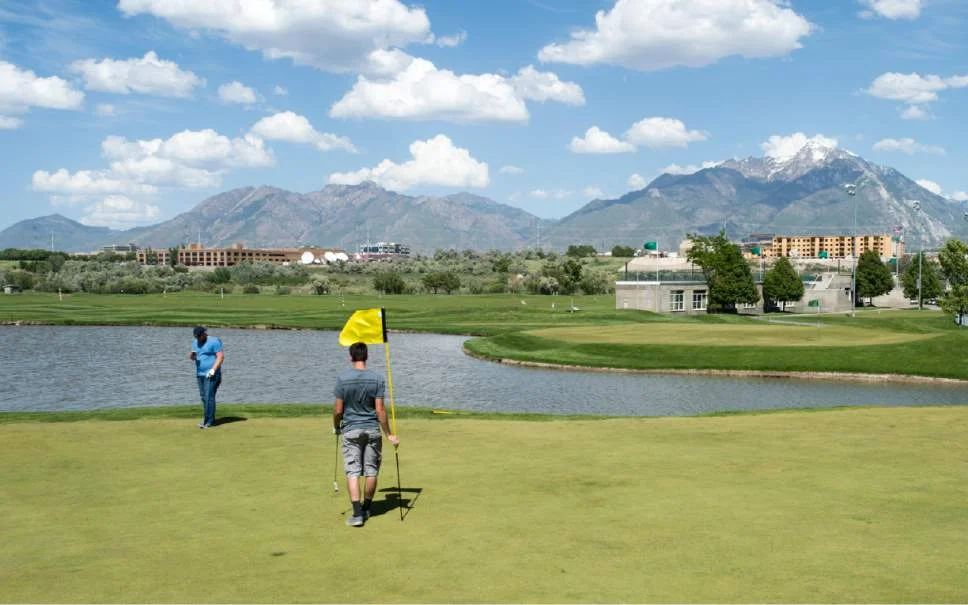
Consultant Staples Golf Design, based in Arizona, laid out five options for the 67-acre golf course near the Jordan River on 10600 South. It recommended the city "maximize [the] best use" of Mulligans, which would cost an estimated $10,865,800.
Under this recommendation, the city would add 18 holes of miniature golf, re-build the golf course, create a recreational center with new features for the Jordan River Trailhead, make aesthetic improvements and create a clubhouse to serve food and drinks and to host events. A new entry would also be built with expanded parking. The city would continue to run the operation for the time being.
"[This scenario] has been determined to be the highest-and-best-use option for improving the quality of life for residents, for creating an amenity that can and will be used by 100 percent of the community and for greatly improving the facility's visibility along 106th as well as the entry into the city," reads the master plan report. "Those who win in the end are the local families, the youth, the area golfers of all skill levels, the seniors and the non-golfers looking to either try the game, or just get in some healthy, fun outdoor activity."
In addition to the option recommended, the study laid out the following options:
• Keeping Mulligans as is, but paying for needed repairs at an estimated cost of $2.2 million.
* Making minor improvements and expanding with a "minimal investment."
• Converting Mulligans into a regional park at a cost of $3 million to $7 million.
• Selling the city-owned property for an estimated $20 million in revenue.
The report was formally presented to the City Council at its regular Tuesday meeting. No action was taken.
Mayor David Alvord is still gathering more information, but said that if he had to choose now, he would maintain the status quo.
"Mulligans was designed with a certain experience in mind. It's somewhere you can go a little more casually with your kids or your grandkids," said Alvord.
"As it is," he added, "It doesn't require much government subsidy," noting that whatever decision is made, he hopes it does not require constant city general funds.
South Jordan paid off the $4.6 million bond on Mulligans last year. Mulligans runs directly off sales and profits, bringing in about $300,000 annually, according to Alvord.
"Save Mulligans" activist Janalee Tobias expressed her frustration with the entire study.
The city could have saved the money spent on consultants, listened to residents and applied the savings to make the necessary improvements to Mulligans, she said.
Mulligans is extremely important to South Jordan residents, Tobias said, and they want to see the facility continue as it is.
"I cannot stress to you how [much] people love Mulligans," said Tobias. "Where else can parents take their kids for nine bucks? As the world becomes more developed, it's just so important for kids to be able to have a place to go and to have an experience in nature, to feel the breeze on [their] faces. And if you're lucky, you're going to see a fox along the Jordan River while you're golfing."

Midvale leaders, residents don’t like it, but council OKs big tax hike
More revenue » Midvale says it has no choice; leaders and residents are not happy with vote.
Midvale • City Council members and residents debated a proposed 144 percent property tax increase Tuesday night.
Although many people — including City Council members — expressed their displeasure with the proposal, the council on Tuesday night approved the increase on a 3-2 vote.
Laurie Harvey, assistant city manager and director of finance, said the total increase is 144 percent.
Residents seemed shocked that such a big increase was necessary.
Dorothy Dailey is one of many widows in the area who worry about what the tax increase means for her. "A widow in our situation is on a fixed income. We don't get a raise. If you raise our taxes that much, that comes out of our living expense, and there's no way we can make it up," said Dailey. "I wish you'd take into consideration that some of us aren't quite as well off as you are."
City officials explained that Midvale has the lowest tax rates in the state, which is now proving a problem for the city of 33,000. Midvale currently receives only four percent of residents' property tax payment, which is about $68 on an average $200,000 home.
At that rate, City Hall gets less than $1 million each year, according to City Manager Kane Loader.
The increase raises taxes by about $100 on the same home, and 10 percent of the overall property taxes will go to the city.
City officials also said this tax increase should provide the city with an adequate budget through 2023, even with a five percent increase each year.
Still, many residents were frustrated by the proposed increase, saying it should have been phased in over the years.
"So the thinking was, we don't increase then, but we're just gonna massively increase now. That to me is a disconnect. Whereas a gradual increase is a lot easier for most consumers to absorb," said Milan Vasic.
The Council admitted they made a mistake by not gradually increasing taxes in the past but said the tax increase is their only option now to avoid a deficit in 2017.
"We're not career politicians. We live in the same neighborhoods. We are you, you are us. This property tax increase affects me personally; I'm raising my own taxes. And so as we look at this, we try our best to run as lean as possible. We just can't do it anymore, and we admit that we made a mistake in prior years by not incrementally raising it," said Councilman Paul Hunt. The council said it will be more diligent in the future.
Hunt joined Stephen Brown and Quinn Sperry in approving the increase. Councilmen Wayne Sharp and Paul Glover voted against it.
The Council last raised taxes in 2010, hiking them 17 percent for an average $40 increase on an average home.
Vasic asked council members what citizens can do to help the city, so a drastic tax increase like this one does not happen again.
Councilman Brown said that residents need to reach out to their state legislators to let them know the city is underfunded and needs help.
"Every one of them that knows the help that we need is a plus for us. It helps us," said Brown.
City Council also voted to adopt the proposed budget for the 2017 fiscal year. This budget includes an increase in police spending because the contract rate has increased, an increased salary for a full-time mayor, and money to pay off the city's debts.
New development plan in the works for old Granite High School
Preservation, development » The on-again, off-again deal could soon be on again.
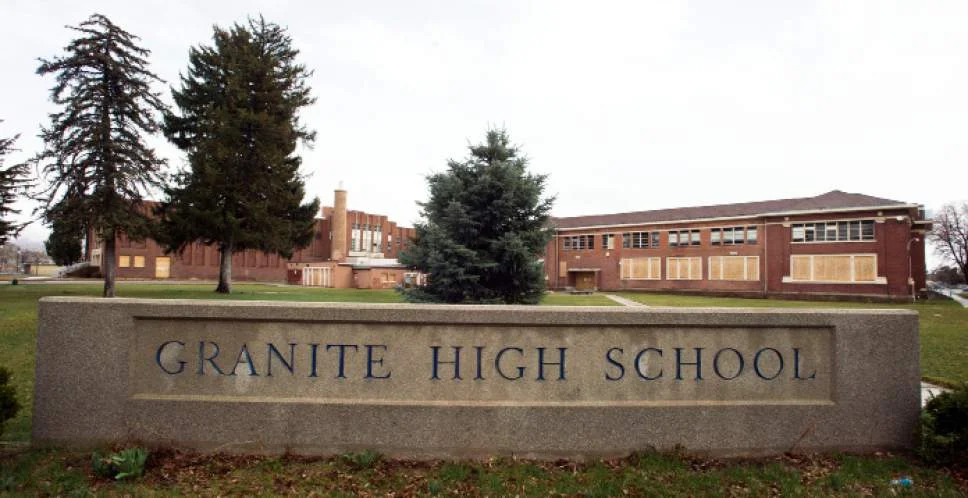
South Salt Lake • A prominent developer's deal to buy the old Granite High School property has been extended and a new development plan is in the works.
Garbett Homes and Wasatch Property's previous plan included 78 homes and a retail center anchored by a neighborhood Wal-Mart grocery store and would have put $10.6 million in Granite School District's coffers.
While the residential aspect of the development was never in question — the area is already zoned for housing — the community opposed the location for a Wal-Mart grocery. South Salt Lake Mayor Cherie Wood vetoed the plan, and the City Council, which favored it, couldn't muster the votes to override the mayor.
Many thought that would be the end of the deal.
But, in June, Garbett Homes extended its deal with the school district for six months, negotiating a slightly lower price. Now the developer is working to create a plan that will garner the community's approval, which likely means some form of preservation for the old school.
"We've always been open to [preservation]," said Garbett Home's Jacob Ballstaedt. "We're always interested in trying to figure out ways to preserve history, but preserving the building is difficult. We're trying and we're interested in folks' wishes."
He noted that Garbett's first plan included a legacy park with artifacts selected by the Granite High Alumni Association, and the developers continue to work closely with the association.
The association's Merili Carter attended the school, as did her great-grandmother, grandparents, aunts, uncles and sister. Her interest isn't just personal, though; she explained that Granite High is an important community landmark.
The theater and gym building, for instance, was erected between 1938 and 1939 as part of President Franklin D. Roosevelt's New Deal with funding from the Public Works Administration. The building is in the PWA's architectural style that was seen throughout the country during that era.
Carter discovered this detail while researching old news articles for a book on Granite High that will be distributed at the alumni reunion Saturday.
"When you find out about all that, it's like, 'Oh man, how can they tear that down?'" said Carter.
She would like to preserve the buildings, but realizes that would be difficult. That, she said, is where the Utah Arts Alliance comes in.
The alliance hopes to meet with the developer to discuss purchasing a portion of the land, which would include the auditorium and administration buildings, and possibly the industrial arts building, according to member Kristine Dobson. The funds, she said, would come from donations from the arts community and alumni.
"It has the potential to be a real community hub. It would revitalize that area. It's pretty sad to see what's happening there right now," said Dobson. "I love the historical buildings. I think it's really sad to demolish everything."
The Utah Arts Alliance has met with the mayor but has not yet been able to meet with Garbett Homes. Ballstaedt said the developer will meet with community members once it formulates a new plan.
"We're excited about the development. We have a history in South Salt Lake, and we think the homes can be a great value to the community. We look forward to building something there," said Ballstaedt.
Granite School District pays to maintain the property — an expense that previously was running into hundreds of thousands of dollars a year, according to spokesman Ben Horsley. The district has since cut back "to bare bones minimum to maintain security." District police monitor the boarded-up school, which is equipped with alarms. Still, break-ins occur.
"Our job as a school district is not to maintain parks and rec[reation], but to educate students," said Horsley.
The district tried to work on preservation with the city several times, but the city was never able to allocate the funds to the project because residents voted against two bonds, he said. The district received several offers and ultimately went with the one it believes will win the city's OK while providing the most revenue to devote to education.

Millcreek neighbors get into traffic jam over Grandeur Peak parking problems
Grandeur Peak Trailhead is giving Millcreek residents a congestion headache. Neighbors clashed Tuesday during a Salt Lake County Council meeting over how to handle parking near the popular spot, weighing in on options to alleviate the problem.
Grandeur Peak Trailhead is giving Millcreek residents a congestion headache.
Neighbors clashed Tuesday during a Salt Lake County Council meeting over how to handle parking near the popular spot, weighing in on options to alleviate the problem.
The trailhead — which offers access to Grandeur Peak, the Shoot the Tube aqueduct and dog trails — has a small parking lot, leading many trailgoers to park along residential streets in the area when the lot is full.
Last summer, the county began a yearlong pilot program that blocks visitors from parking along Warr Road, Cascade Circle and part of Cascade Way. Residents have parking permits and may obtain extra ones for their guests, but as the pilot program comes to an end, community members are split over how to proceed.
Many residents wore "I'm for parking" stickers at Tuesday's meeting and want to make the permit parking permanent. Neighbors said that before the tags were introduced, trailgoers were parking in front of residents' driveways, using their water spigots and leaving trash in their yards. The permits, they say, have changed all that.
Greg Koon said he saw several drug deals in front of his house before the pilot program. One time, he recounted, two people were arguing over the price of methamphetamine in a car outside his house. When they couldn't agree, he said, they pulled guns on each other. Since the signs restricting parking were put up in the neighborhood, though, Koon says he has not seen any drug deals.
"[We are] asking to live in a typical, quiet neighborhood, too," he said.
Other community members expressed varying safety concerns during the meeting. The streets leading up to the trailhead are narrow, they said, so only one car can move up or down the hill when the sides are lined with cars. Visitors also, according to community members, would park in front of fire hydrants and even set a hill on fire.
"We love the fact that we live next to open space, but we need to manage our streets," said Jemina Keller.
Not all area residents, however, would like to see permit parking continue.
Clay Northrop said preserving the open space in the area was meant to benefit all county residents, "not just those who can walk to" the trailhead.
The real issue, he said, is not parking along the streets; it is a lack of parking at the trailhead. Permit parking, he said, only pushes the issue down a few blocks.
Terra Reilly agreed.
"My concern right now is three things: access to the trailhead, impact on neighbors and, frankly, exclusive enforcement," Reilly said. The people who use the trail are there to have fun, "and that idea of fun is a big part of Salt Lake City."
Many people come into the area to enjoy the outdoors, she says, which contributes to recreation and tourism industries in the state. But the parking permits, she says, create a feeling of exclusivity on the trails.
"Don't cut off access to something that is quintessentially Utah," Reilly said.
Councilman Steve DeBry said the parking problem will only get bigger as Utah's population increases and more people seek outdoor recreation near the county's urban center. It would cost nearly a half-million dollars, he said, to add 12 parking spaces to the trailhead, which would only satisfy the demand for a short time.
"It's a damned-if-you-do, damned-if-you-don't situation," he said.
The County Council did not vote on the issue at Tuesday's meeting. It plans to continue the public hearing and vote on the issue at its Aug. 9 meeting.
West Jordan City Council considers electronic-tracking sensors amid privacy concerns
The City Council is considering a proposal to install sensors that would collect real-time data by tracking electronic devices' Wi-Fi and Bluetooth signals.
West Jordan • The City Council is considering a proposal to install sensors that would collect real-time data by tracking electronic devices' Wi-Fi and Bluetooth signals.
Council members will hold a public hearing and bring back the idea of signing a contract with Blyncsy for a test period.
Blyncsy is a Salt Lake City-based start-up that has installed sensors in cities across five states. These sensors are installed on light poles and pick up a customized electronic identifier each time a device passes under the sensor. This data allows cities and businesses to track traffic data more accurately than other methods, so the data can be used for economic development, finding faster routes for police and firefighters and event planning.
CEO Mark Pittman proposed a $15,000 pilot program that would install 30 sensors around the city for a three-month trial period.
Besides paying the installation fees, though, the city would not be paying for the sensors. By law the city cannot own the sensors, so Blyncsy would give the city the data for its benefit. Blyncsy, then would make a profit by selling the data to local businesses who can use the data to improve their strategies.
"I'm impressed," said Mayor Kim Rolfe. "This tool couldn't be replaced for near the cost." Rolfe recalled once standing on a street corner counting cars because he did not think a $50,000 Utah Department of Transportation study was accurate. He was excited by the possibilities presented by Pittman.
Several council members, however, expressed concern over individuals' privacy.
Pittman reassured the council, saying Blyncsy does not know individuals' identities. Electronics give off a personalized electronic identifier through their Wi-Fi and Bluetooth signals, but these signals do not include a person's name.
Pittman also explained that legislation was passed in the 2016 legislative session that prevents Blyncsy's data from being used for crime cases or to track people. According to HB369, government entities can collect anonymous electronic data, but the data cannot be used in judicial proceedings. This prevents Blyncsy from being put in circumstances similar to those seen in Silicon Valley, Calif, when the FBI ordered Apple to unlock the San Bernadino mass shooter's Phone. Apple refused and the legal battle ended only after a third party succeeded in unlocking the phone.
Individuals can opt out their electronics from Blyncsy's data gathering on the company's website. Pittman also said that devices that have their Wi-Fi and Bluetooth turned off cannot be tracked.
The public has already shown concern over the proposal. City Council members agreed to further consider the proposal as long as the public is educated on and approves of the sensors.
Park City has 60 sensors in the city, which were installed for around $75,000. The sensors have been used to track data for Sundance Film Festival, which is helping the city plan for future events.
Taylorsville celebrates 20th anniversary with optimism for future
‘Centennial City’ wants to hold onto small-town feel even as it goes through big changes.
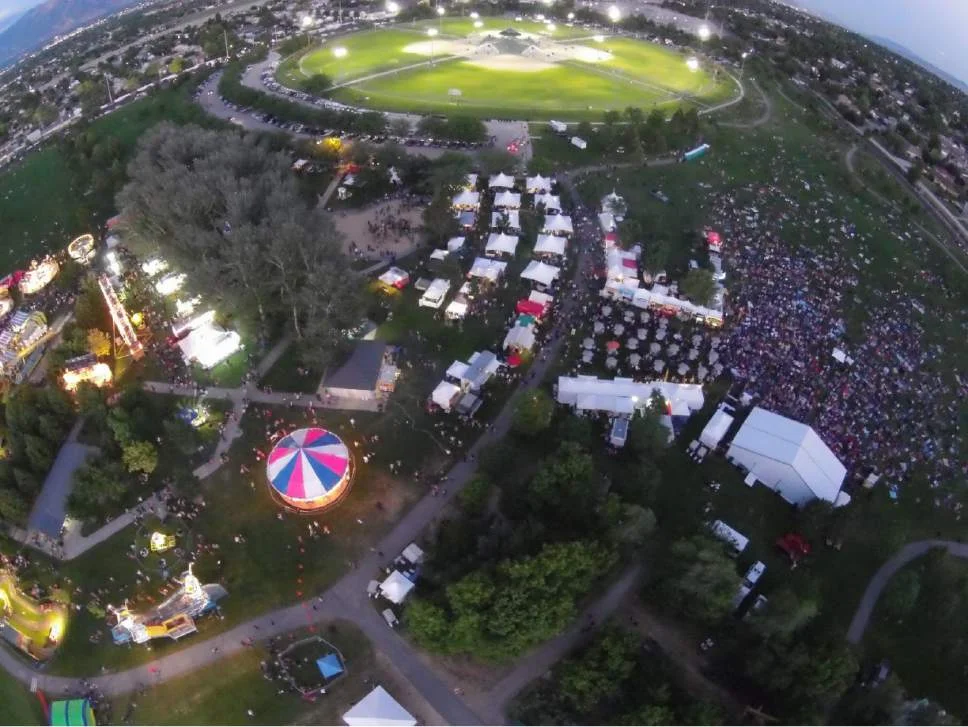
Taylorsville • One hundred years after Utah became a state, the "Centennial City" was formed. Now coming up on its July 1, 20th anniversary, Taylorsville became a city after 70 percent of residents voted to incorporate.
The incorporation was driven by 55,147 residents who wanted to see their city succeed. They had a $9 million budget, their own City Council and a new sense of autonomy.
"It gave us local control," said state Rep. Jim Dunnigan, who served on Taylorsville's advisory council when it was part of unincorporated Salt Lake County and later on the City Council.
One of Taylorsville's greatest successes, he said, is citizens' can-do attitude and volunteerism. "When we started the city from scratch, we had a lot of volunteers that wanted to see the city be a success. There is a good feeling of people trying to help each other and looking out for their neighbors."
Those volunteers drove many community projects, including Taylorsville Dayzz, which began its three-day annual run on Thursday.
When the festival started in 1997, it was a modest, one-day event. There was a parade, some booths and entertainment that all wrapped up by 7:30 Saturday night.
When Dunnigan became the event chair, he added fireworks, and that, he says, "was the pixie dust" that spurred Taylorsville Dayzz expansion and popularity — with 30,000 expected to attend on Saturday night alone.
Twenty years into its incorporation, Taylorsville City now has a population of 60,514 (making it the 12th largest city in Utah), a budget of $32 million and 1,965 licensed businesses. It is also home to the state's largest community college campus — Salt Lake Community College.
"I honestly don't see a lot of change. I think Taylorsville has an identity and the citizens like it," said Russ Wall, Taylorsville's mayor from 2006 to 2013.
The city, like any, has faced its challenges. Now almost completely built out, Taylorsville has only 120 acres of its 10.7 square miles of land left to develop. Traffic is a constant problem since the city is a crossroads — 5400 South and Redwood Road last year was identified as the state's busiest intersection with more than 99,000 vehicles a day — and there is not an east to west freeway in that part of the valley. Some businesses also have struggled
"The challenge is we have businesses in some areas getting older, but that provides an opportunity for someone to repurpose the structure and rejuvenate it," says Dunnigan. "As the older families pass on, younger families come in and it regenerates. A number of older businesses have been torn down and new ones have been built. It's kind of a rebirth," said Dunnigan.
City Planner Matt Taylor confirmed Dunnigan's optimism. Taylor said some shopping centers in Taylorsville have around a 15 to 20-year life cycle, which gives developers the chance to build something new. Big new retail developments currently are underway in the 5400 So. Redwood area, including a new theater complex.
"One of most important things is to keep residence neighborhoods attractive and valuable. The combination of a strong citizenry with good opportunity for redevelopment can entice developers to come in and redevelop," said Taylor. "We'll continue to work with developers to reinvest and reinvent."
The city is also working with the Utah Transit Authority on a bus rapid transit system that would like Salt Lake Community College's Redwood Campus to Murray Central TRAX Station, which would alleviate some of the city's transportation problems.
But city advocates say with all the outward change and challenges, some things have remained constant.
"Taylorsville has an identity and the citizens like it," said Russ Wall, Taylorsville's mayor from 2006 to 2013. "We're kind of still a rural, little city in the middle of a very metropolitan county, and I think our citizens are happy."

South Salt Lake mayor, city council settle on compromise budget
Budget discussions at a special City Council meeting earlier in the week revealed a deep rift between Mayor Cherie Wood and council members, though they were resolved in a compromise agreement approved unanimously last Wednesday.
South Salt Lake • Budget discussions at a special City Council meeting earlier in the week revealed a deep rift between Mayor Cherie Wood and council members, though they were resolved in a compromise agreement approved unanimously last Wednesday.
"We're excited," Wood said Friday, adding that the city will pursue federal and energy-related grants to "leverage" city tax dollars.
The council wanted several projects funded: a traffic signal at the Sugar House streetcar and 400 East, where several people have been killed; curb and gutter projects; fixing the storm drain problem at Lincoln Park; landscaping improvements along Helm Ave. and Baird Ave.; street lighting; council outreach and neighborhood communications; and a slight raise for civilian employees. The council also will hire its own attorney.
Based on the original proposal, these projects would have cost $1.8 million. The council suggested eliminating the Urban Livability Department and moving animal services to the police department and code enforcement to the economic development department. The council's proposed budget also called for eliminating the Fire Department's take-home vehicles, decreasing the mayor's administrative budget and contracting out the city's newsletter to The Valley Journals.
The public and mayor opposed proposed reductions in the Urban Livability department or increases in fire-response times. Administrators also feared that the city council's budget would eliminate jobs.
"We're cutting people," warned Wood. "There is no more fluff to cut. We've been cutting for six years — since I've been in office."
She encouraged the council to instead search for grant money for their special projects.
The council is already receiving $1 million from new state legislation and $91,000 from property taxes due to the city's growth.
After hours of back and forth Tuesday night, the council reduced the budget for its special projects to $1,061,500, with an agreement to search for federal grants.
Among other things:
• The council decided against cutting the fire department's take-home vehicles.
• Urban Livability will become a division.
• The city will contract out the newsletter and park three administration take-home vehicles.
Council members complained that aside from budget discussions over the last two weeks, they have had little communication with the mayor.
Council Chairwoman Debbie Snow said none of the council's budget priorities were included in the mayor's budget.
Councilman Ben Pender said the rift stretched beyond the budget.
"Mayor, you've communicated more in the last two weeks than the last several months," said Pender.
He also noted that city laws make it difficult for council members to meet with department heads and if those obstacles were removed and council members could ask department heads to ask questions, the budget process would not have been shorter and simpler.
Wood thanked the council for compromising and asked for its help making the administrative department more transparent.
Pender, in turn, urged the mayor not to "stop the dialogue because the budget's over."
Farmers market comes to Holladay
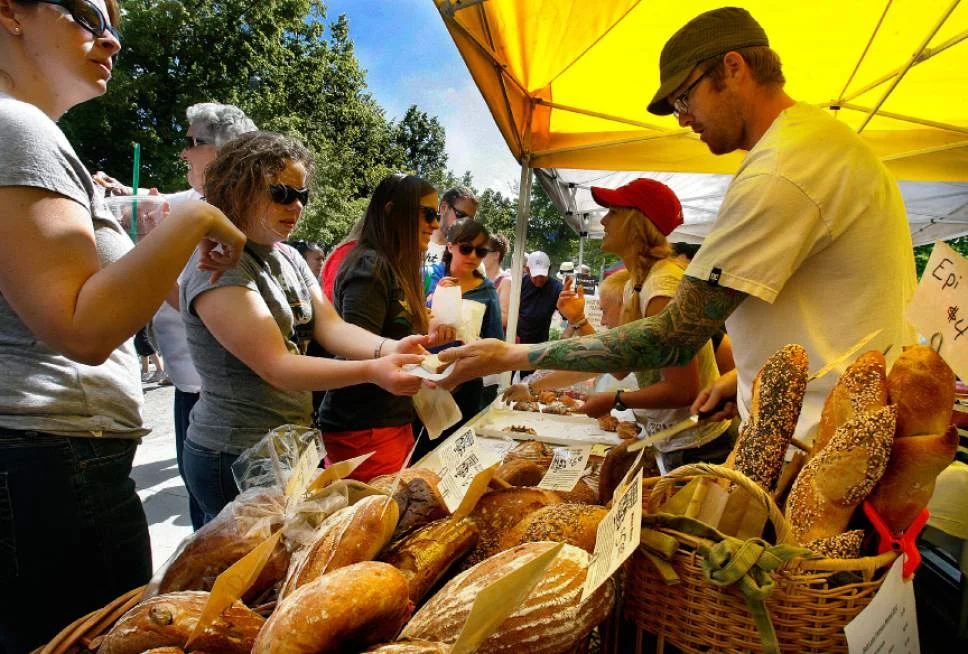
The City Council has cleared the way for a new community amenity: a farmers market in the Village Center Plaza.
Holladay • The City Council has cleared the way for a new community amenity: a farmers market in the Village Center Plaza.
The market, which Mayor Rob Dahle said is the first of its kind in Holladay, will open Saturday and will run each Saturday from 9 a.m. to 1 p.m., through Oct. 29.
The City Council on Thursday night unanimously approved an agreement with the organizer, Maryann Alston, director of Wasatch Front Farmers Market, although, Alston has yet to sign the agreement. The same firm runs the market at Wheeler Historic Farm.
Council members are not entirely sure what to expect, but they hope the market will be a large success. According to the accord, the plaza must remain open to the public, which the council says will provide natural traffic to the market. Furthermore, if the market becomes too crowded — which the City Council believes is probable — the city may move the market to City Hall Park to accommodate more people.
According to the agreement, Alston will provide portable toilets and garbage and waste removal; will pay $200 rent each week; will carry $2 million liability coverage; and may terminate the agreement upon notice.
The city, in turn, will close Laney Avenue during the market's hours of operation, at the council's discretion, and may also terminate the agreement with a 30-day notice.
The city does not anticipate costs to the city to exceed the revenue from rent. Possible costs, however, may come from extra personnel needed to close the street and to perform other tasks as needed the day of the event.
The feasibility of the market and its future will be determined on June 6, when the City Council expects to receive feedback from the community.
GOP Senate candidates split on SB54 but agree on wide range of issues
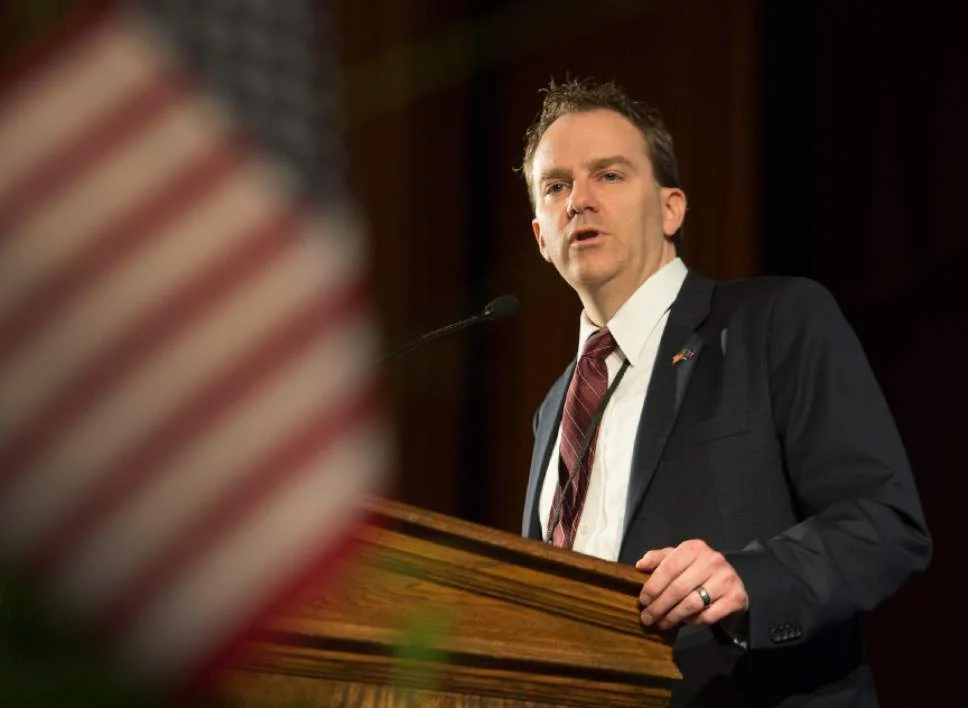
Primary election rivals state Sen. Lincoln Fillmore and Rep. Rich Cunningham, both R-South Jordan, hold similar views on a lot of issues, but when it comes to SB54 and how candidates are nominated they have a dramatic parting of the ways.
South Jordan • Primary election rivals state Sen. Lincoln Fillmore and Rep. Rich Cunningham, both R-South Jordan, hold similar views on a lot of issues: they're against Common Core, favor the state taking control of millions of acres of federal lands and place education among their top priorities.
But when it comes to SB54 and how candidates are nominated they have a dramatic parting of the ways.
"It undermines democracy," Fillmore said during a Wednesday night debate, referring to the new law that allows a hopeful to gather signatures to get on a primary ballot.
The senator, who was elected by Republican delegates in District 10 to fill the vacant seat last December, again won the votes of 60 percent of delegates at the county GOP convention in April. Under the old rules, he would have secured the nomination with that convention victory.
But Cunningham, who finished with less than the 41 percent needed at convention, had already locked up a place on the primary ballot by gathering the 2,000 signatures required under SB54.
Fillmore said the new law creates a conflict of interest because it allows politicians — SB54 was approved by members of the Republican-controlled Legislature and Gov. Gary Herbert — to set the rules rather than parties. He also criticized Cunningham for hypocrisy because he voted against SB54, then used it to continue his Senate campaign.
Cunningham defended his gathering of signatures and said while he did oppose SB54, it is now the law of the land and he feels free to avail himself of it.
Besides, he said, community members were glad to be part of the process when he was collecting signatures and "The vote and voice of the people are the most critical things out there today."
The two-term House member says he continues to support the state Republican Party's right to challenge the law in court, which the GOP Central Committee recently indicated it would likely continue to do despite several defeats.
What Cunningham doesn't support and has previously complained about is that the county Republican Party has endorsed Fillmore, a break from tradition and longtime rules that precluded the GOP from taking sides before a primary.
—
Education • On the topic of education, both candidates during their debate at the Legacy Retirement Residence pledged their commitment to improving and supporting Utah schools. Both said they favored getting rid of Common Core, minimum grade-level standards for math and English.
"The federal government has no business bribing states to force them to choose a curriculum made by experts in D.C. The curriculum should be made locally," said Fillmore, a former teacher and now president of a charter school management company.
Cunningham, whose wife is a school teacher, said he constantly hears about problems with Common Core.
"We know our children better [at the local level]," said Cunningham. "There are 41 school districts in Utah, and they aren't the same. We need to get local control back."
—
Public lands • Both candidates agreed the state, not the federal government, should control public lands in Utah.
Fillmore noted that there are 37,000 acres of developable land remaining in Salt Lake County, and he compared that to the proposal for a 1.9-million acre Bears Ears National Monument in San Juan County, calling the idea is ludicrous.
Cunningham, who said he grew up in southeastern Utah, echoed the sentiment, saying he will continue fighting for state control of public lands because — he asserted — 95 percent of his constituents favor that action.
photo by Leah Hogsten
Cemetery gift shop? Salt Lake City hopes to preserve, improve cemetery with new master plan
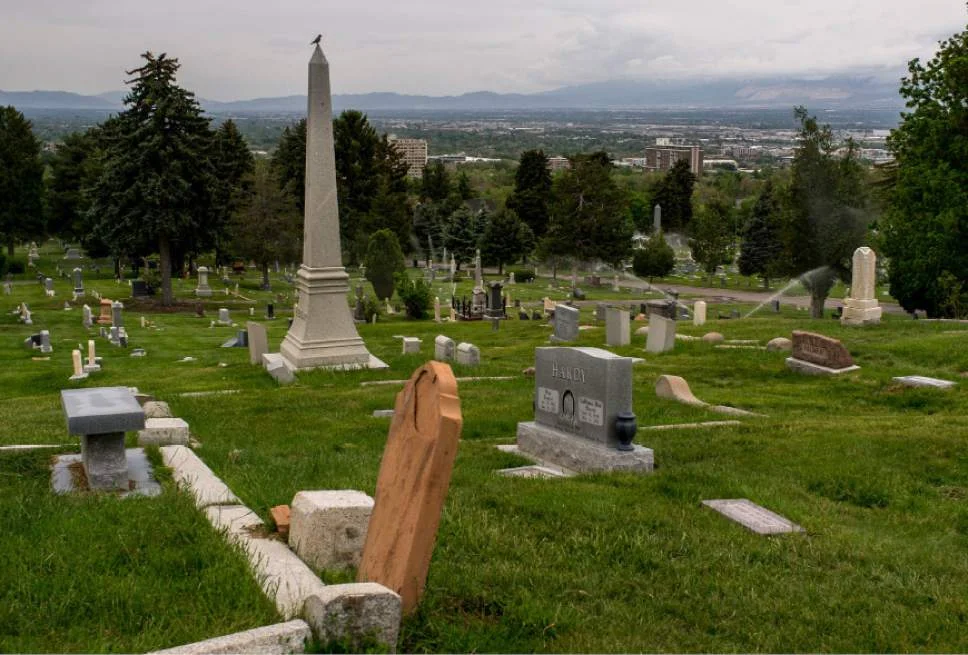
The Salt Lake City Cemetery is working to create a master plan that will guide future decisions to make the cemetery more sustainable and enjoyable for future generations.
The Salt Lake City Cemetery is working to create a master plan that will guide future decisions to make the cemetery more sustainable and enjoyable for future generations.
Cemetery representatives held an open house last week, where the public was able to address their concerns and provide input into the future of the cemetery.
Sexton Mark Smith explained that the cemetery has no more room to expand and only 800 plots left to sell. Since plot sales are the cemetery's biggest source of revenue, the cemetery needs to find new revenue streams without sacrificing the ambiance of the area.
Among community suggestions were asking for donations; tours; adding beekeeping; hosting a 5K run fundraiser; leveraging the cemetery as an important historic site; and establishment of a cemetery gift shop.
Smith, who has been sexton since 2002, said the cemetery is not just a burial site. Community members come to the 120-acre cemetery to bird watch, enjoy the views, admire the art and jog. Smith said they are always respectful.
"Cemeteries are for the living," he said. "We need to teach the youth that cemeteries are places to visit and should be used as green space."
The cemetery is also an important place to study Utah's history.
Smith calls it " an historical jewel. … The individuals in that cemetery built this city. Cemeteries remind us of who we are."
Community members wrote down suggestions for the master plan, with emphasis on preserving the peaceful atmosphere and historical features. Any new additions, community members suggest, should be beautiful and environmentally conscious.
The planning team hopes to finish the master plan by February 2017. Another open house will be held this fall and another early in 2017.
The Salt Lake City Cemetery is located between N and U streets and Fourth Avenue and Wasatch Boulevard. It has 9½ miles of roads. There are about 124,000 people buried in the cemetery, including numerous Utah governors and Salt Lake City mayors and many LDS Church leaders.
The master plan is intended to be a 20-year course of action that officials will add to based on contemporary needs.
Dustin Wiberg, a senior associate at G Brown Design who specializes in landscape cemetery architecture, is part of the planning team working on the master plan. Wiberg believes there are three main points that need to be considered to create the blueprint. Planners need to understand what needs to be preserved, how to make the plan work financially in the long-term and, finally, planners need to understand how people utilize the cemetery and what uses people like, want to enhance and want to introduce.

Utah Aging Commission has new executive director
Rob Ence was appointed the Utah Aging Commission's new executive director.
Rob Ence attended his first meeting of the Utah Commission on Aging on Thursday as executive director.
Ence, former west regional vice president for AARP, assumed his post on May 16 after a "rousing round of approval," said Mark Supiano, who represents higher education on the commission.
After leaving his position at AARP, Ence said he wanted to find another position in the aging world that he would love and that would allow him to make a difference in the community. He found out about the commission opening by chance and went through a two-part hiring process, ending his appointment by the governor.
"This is not a deeply resourced position. The potential is untapped," said Ence.
Ence says that although he is not a prolific researcher or fundraiser, he is an energetic, strategic thinker who likes to listen to multiple ideas and can build a clear strategy for the future. He has access to a wide variety of resources from his previous positions in the field, and he hopes to lead the commission to seek out the best solutions for the collective.
"I don't want to just survive as a commission; I want us to thrive," said Ence. "I want us to be innovators of future possibilities."
The commission is charged with using research and public education to help guide policy and facilitate coordination of services related to aging.
Ence stressed the idea of working for the collective, saying he wants the commission to provide resources that will help train and educate businesses, the public sector and individuals. The commission, he said, needs to decide what it thinks are the most important milestones that will lead to success.
"We have a responsibility to prepare this state to care for each other as we age," said Ence.
The Commission on Aging was originally intended to last a few years. The commission has a legislative hearing June 15 on its continued authorization. Ence plans to show that the commission has "moved a needle" and to ask for additional funding.
Ence previously served as AARP's Utah state director, CFO of Planned Parenthood of Utah and the Midtown Community Health Center and COO/CFO of Sage Creek Apparel Co. He received an MBA from the University of Utah in 1991.
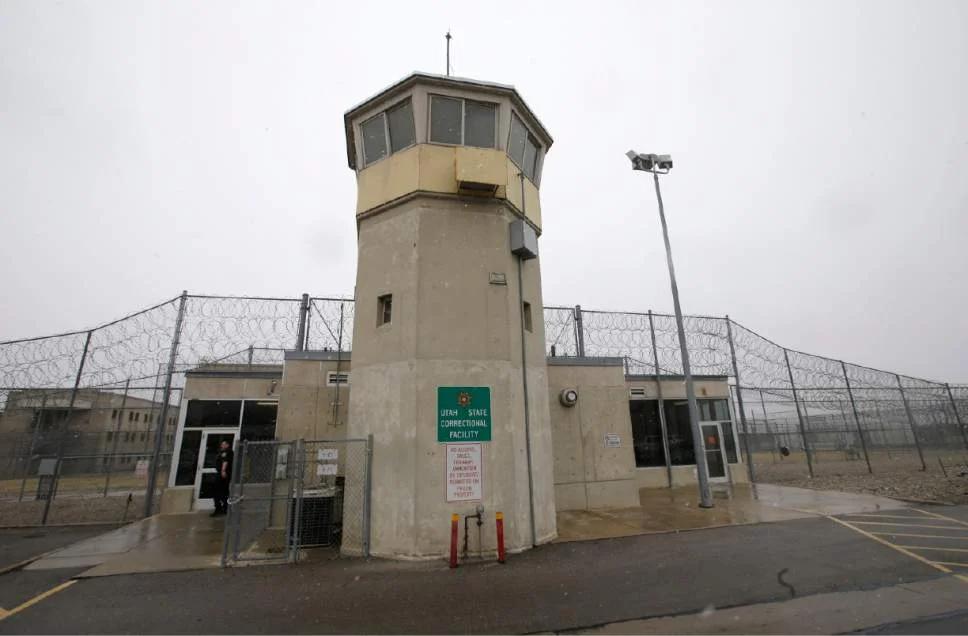
Draper Historic Commission wants to preserve prison history
The Draper Historic Preservation Commission wants to preserve a piece of the history of the Utah State Prison.
Draper • The city Historic Preservation Commission wants to preserve a piece of the history of the Utah State Prison.
A new prison is planned west of Salt Lake City International Airport and is expected to be finished sometime in 2020, at which point inmates will be moved and the prison in Draper will be torn down. The commission wants a reminder of the lockup in its current location. This is proving difficult, however, because the prison is owned by the state and not the city.
Commissioners explained that they do not want to preserve the entire prison; they want to document it for the corrections history that has been made there. This could mean preserving a tower, placing a plaque or, perhaps, building a commemorative park.
Commissioner Todd Shoemaker believes the community would regret not preserving it.
"You have a story out there for all kinds of crimes, and it's not just the crimes. You could go out there and talk about parole officers. You can go in there and talk about volunteer groups, church groups. You can talk about the police," said Shoemaker. "Is there any place in the state where you can go to that honors that or the people involved in prison?"
Commissioners recognize that any sort of documentation or preservation would need to pay for itself to be an asset to future development on the valuable land.
Commissioner Katie Shell noted that the preservation puts money into the economy. A 2011 report prepared by PlaceEconomics for the U.S. Advisory Council on Historic Preservation states that historic preservation benefits a local economy in five general ways.
Historic preservation creates jobs, increases property values, brings revenue from tourism, protects the environment and revitalizes downtown areas.
"By protecting our historic resources, we are honoring the investments of our grandparents," the document states. "But at the same time we are helping create a healthy economy for our grandchildren."
Commissioners also noted the educational value of documentation.
Shell used to give tours at the historic Sorensen Home in Draper. She told students that the house was preserved because people before them cared about future generations and wanted them to be able to see a piece of history.
The same idea applies to the prison, Shell said.
"Maybe someday we'll have a world where crime is dealt with differently" and students can come to learn their history, Shell said. "You can see pictures, but buildings evoke more."
The commission plans to tour the prison and to contact legislators.
It has asked Korral Broschinsky, a consultant in historic preservation, to begin documentation of the prison.
The Utah State Prison opened in Draper in 1951 to replace Sugar House Prison, which stood where Salt Lake City's Sugar House Park is today. The Draper prison has housed Ted Bundy, Gary Gilmore and Ervil LeBaron.

Preschoolers donate money for all-inclusive playground
A group of preschoolers handed a check Tuesday to City Council members to build a new, all-abilities playground.
Orem • A group of preschoolers handed a check Tuesday to City Council members to build a new, all-abilities playground.
Preschool students from the Playful Studies Preschool and Private Kindergarten donated $1,352.39 to be used for the All-Together Playground.
The playground will be built in Orem's City Center Park and is expected to open in September. According to its website, the all-abilities playground "will give all children in Utah County the chance to play, grow, and learn side-by-side" regardless of their age or abilities.
AshLee Winterrose's students were inspired by a friend, who uses a wheelchair, and the conviction that their friend needed a place to play, too, so they started fundraising.

Dimple Dell zoning proposal stirs up residents
City planning commissioners and community members have debated a code amendment that would affect land development around Dimple Dell Park, ultimately recommending a mandatory overlay zone on all new development on a 4-2 vote.
Sandy • City planning commissioners and community members have debated a code amendment that would affect land development around Dimple Dell Park, ultimately recommending a mandatory overlay zone on all new development on a 4-2 vote.
Dimple Dell is a 644-acre natural area with horse, bike and foot trails.
A committee drafted the original plan presented to the commission Thursday that would create a new overlay zone around the park, calling for bigger setbacks of 20 to 30 feet, and allow a cluster development to be built on five acres of land. Commissioners approved only the overlay zone, with that recommendation now headed to the city council for consideration. In the face of significant opposition, commissioners didn't vote on the cluster proposal.
The cluster development of 15 houses, would have required 30 percent of the land to be open space.
Currently there is no law preventing building at the bottom of the park, which is private property, Commissioner Doug Haymore clarified.
Brian McCuistion, the Sandy zoning administrator who presented the item, noted that a financial review found that a cluster division would not be profitable. Commissioners stipulated that even if a cluster development were approved, it would not likely be built.
Commission member Nancy Day was on the drafting committee and said the panel had two goals: protecting the park and protecting the community without infringing on individual rights.
Community members, however, opposed the cluster proposal. They urged the commission to reject it and to leave the rules as they are to protect the park and the culture of the area. Several people noted that Dimple Dell is an exclusive community that residents joined when they bought homes and property. Allowing one cluster development would start a "cluster domino effect," warned one resident.
Resident Nancy Workman suggested the commission take time to re-draft the proposal because it was difficult to grasp.
Commission members said they sought to find a balance, allowing only appropriate development but not being too restrictive.

Planning Commission OKs revamp of Alta View Hospital campus
Alta View Hospital won the go-ahead to redevelop its campus to modernize despite vocal opposition from residents.
Sandy • Alta View Hospital won the go-ahead to redevelop its campus to modernize despite vocal opposition from residents.
The Sandy City Planning Commission unanimously approved the hospital's designs, which will be wider and taller than the current hospital to meet modern standards. The campus will have two buildings, each with its own tower. One building will house administrative offices, and the other will be designated for medical care.
Under Sandy ordinance, the hospital can have one building that reaches 100 feet. The plan envisions one at 98 feet and the other 78 feet.
The planning commission's recommendation now goes to the city council for approval.
Bryan Johnson, hospital administrator, explained that the current facility is 30 years old and cannot fulfill the community's needs. The new design would not increase the hospital's capacity. Instead, it would reassign beds and focus more on out-patient care. It would also include new physician services and larger rooms that would allow families to be involved in patients' care.
Many community members expressed their disapproval of the new design. Residents who live across the street from the hospital on Indian Ridge Drive said the new, taller campus would block the view for which they had bought their property. The new campus would depreciate their homes' value and interfere with their quality of life, they said. Some suggested the campus build out instead of up, and others argued a new "mega-campus" is not necessary at all since there is another one 10 minutes away.
Planning Commission Chairman Scott Sabey noted there is no property right to a view in Utah.
Community members also expressed frustration because they had not learned of the project until recently. The hospital should have sought out locals' input, they said.
"If they are part of the community, they should work with the community," complained one community member.
Sabey said a notice was sent out seven days in advance of the meeting, which meets state standards.
The commission unanimously found the plan is consistent with use and zoning requirements, that the changes are incremental and the revamped hospital would be an asset to the community.